
Shockwave therapy is a non-invasive treatment that helps stimulate tissue repair, reduce chronic tendon pain, and accelerate recovery. It’s particularly effective for issues that haven’t responded to standard rehab alone.
We combine this technology with a structured physiotherapy programme to ensure long-term success – it’s not a standalone fix, but a powerful tool when integrated into your plan.
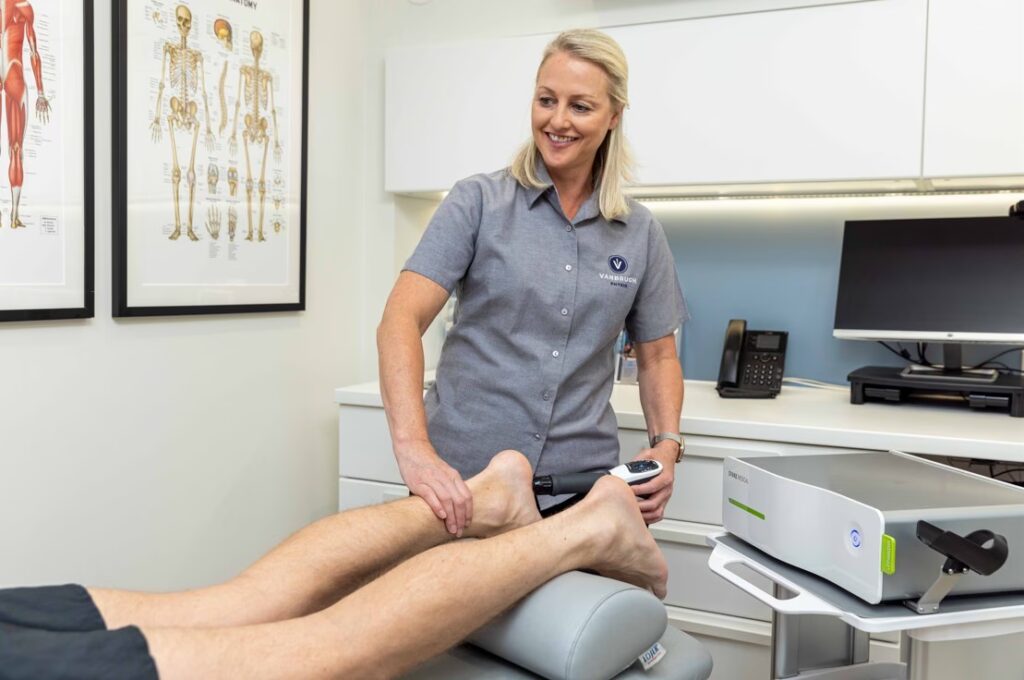
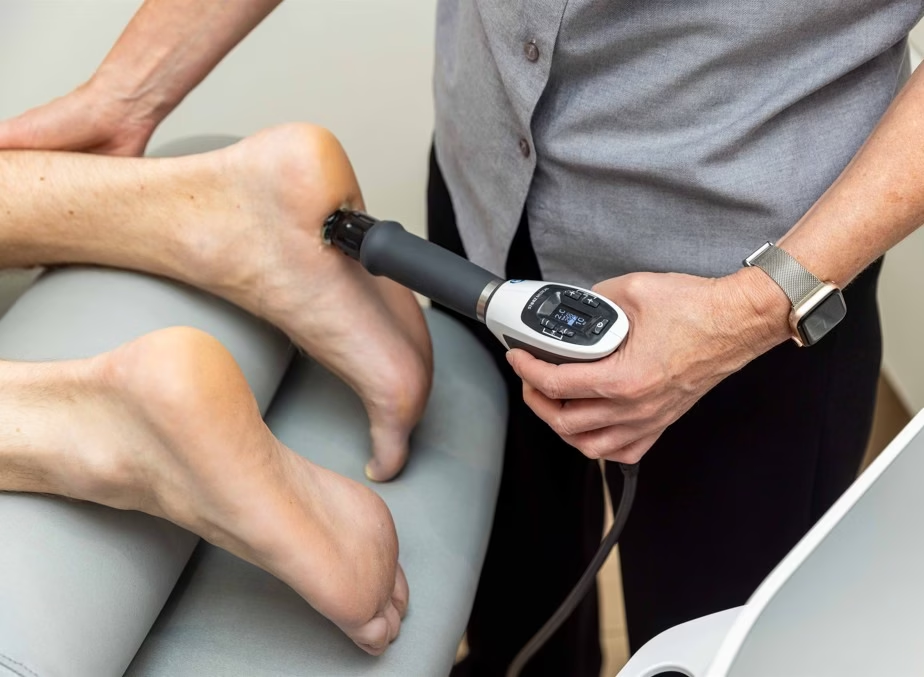
Shockwave therapy can also help with chronic heel pain, shoulder calcification, hamstring injuries, and long-standing muscle tightness. It’s often recommended when symptoms have lasted more than three months or when standard physiotherapy alone hasn’t fully resolved the issue.
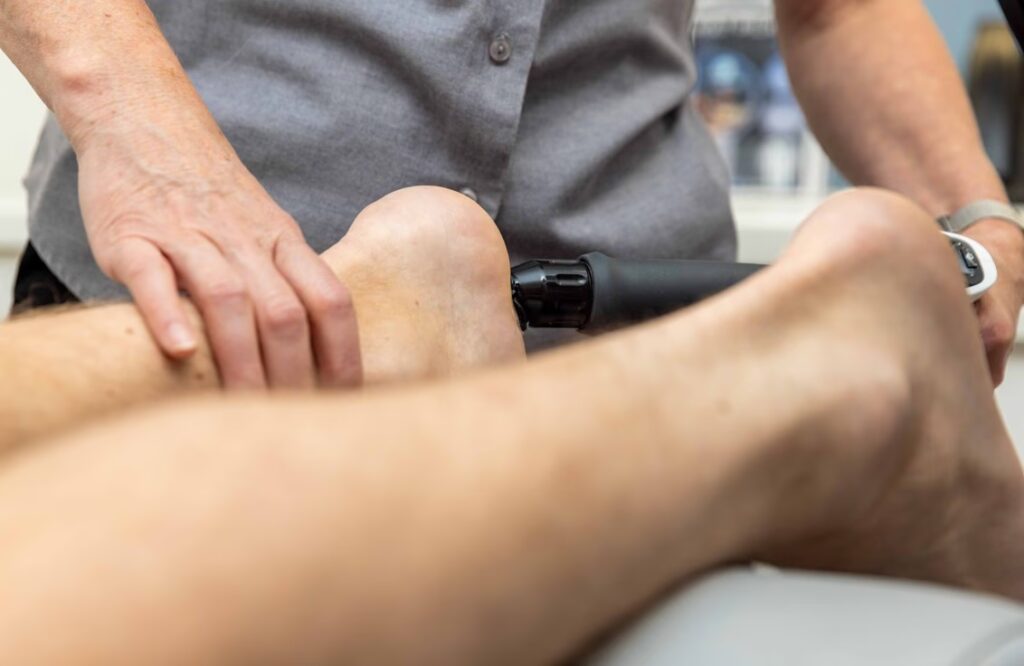
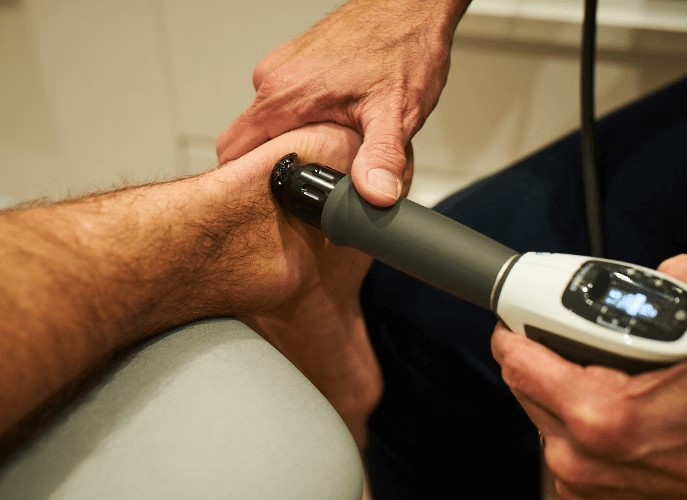
Our clinic is based in Greenwich, South East London, making us easy to reach from Blackheath, Charlton, Deptford, and the wider SE10 area. If you’re searching for “shockwave therapy near me”, Vanbrugh Physio provides expert, evidence-based care close to home.
Shockwave therapy works in several ways to help chronic tendinopathy. Firstly, the shockwaves provide immediate pain relief to the painful area. They do this by desensitising the nerve endings within the tendon. This makes daily activities more tolerable and makes performing your rehabilitation exercises much easier.
Secondly, and most importantly, the shockwaves help to kick-start the body’s own healing process which, in chronic tendinopathy, has often slowed right down or even stalled. They do this by causing controlled micro-trauma (microscopic damage) to the tissues which encourages the body to respond by increasing the blood circulation and metabolism in the affected area.
The most important thing to know about Shockwave Therapy is that it will not work in isolation (it is not a stand-alone treatment). Reducing pain and kick-starting a stalled healing response is one thing, but without a structured loading and rehabilitation program designed by one of our physiotherapists, the tendon will not repair, and the pain will return.
Shockwave Therapy is used extensively in the NHS and is approved by the National Institute for Health & Care Excellence (NICE).
Shockwave is effective in helping treat the following conditions:
For Shockwave Therapy to be effective, you will need a minimum of 4 sessions, given weekly. Some more chronic conditions may require up to 6 sessions. Your physiotherapist will be able to recommend the best package of care for you.
Shockwave therapy works in several ways to help chronic tendon pain and injuries. Firstly, the shockwaves provide immediate pain relief to the painful area. They do this by desensitising the nerve endings within the tendon. This makes daily activities more tolerable and makes performing your rehabilitation exercises much easier.
Secondly, and most importantly, the shockwaves help to kick-start the body’s own healing process which, in chronic tendinopathy, has often slowed right down or even stalled. They do this by causing controlled micro-trauma (microscopic damage) to the tissues which encourages the body to respond by increasing the blood circulation and metabolism in the affected area.
If you are struggling with chronic tendon pain, shockwave therapy is often recommended as part of your treatment plan. Additionally, shockwave therapy can be helpful if you find yourself not responding to a particular treatment pathway.
Shockwave therapy sessions typically last 20 to 30 minutes and will include additional therapies from your tailored physiotherapy programme. Patients can feel the effects of shockwave therapy after 1 session, but the best results are often realised after 4 to 6 treatments.
We use cookies to personalise content and analyse traffic. You can choose which cookies to allow. Privacy Policy • Cookie Policy • Terms & Conditions • Google Privacy
We use cookies to help you navigate efficiently and perform certain functions. You can choose which categories to allow below. Cookies categorised as Necessary are always active.
We also use third-party cookies for analytics and advertising. These are only stored with your consent. You can update or withdraw consent at any time via the cookie icon at the bottom-left. This site operates under UK GDPR, the Data Protection Act 2018, and the Privacy and Electronic Communications Regulations (PECR). Cookie Policy • Privacy Policy
Necessary cookies are required for core site features including security, network management, and consent storage.
| Cookie | Duration | Description |
|---|---|---|
hmdg_cookie_consent | 180 days | Stores your cookie consent preferences. |
PHPSESSID | Session | WordPress session identifier. |
wordpress_logged_in_* | Session | WordPress login authentication. |
Functional cookies enable enhanced features such as live chat and remembering preferences.
| Cookie | Duration | Description |
|---|---|---|
wp-settings-* | 1 year | Stores user interface preferences. |
Analytics cookies help us understand visitor behaviour. Controls analytics_storage for Google Analytics 4.
| Cookie | Duration | Description |
|---|---|---|
_ga | 2 years | Google Analytics — distinguishes users. |
_ga_* | 2 years | Google Analytics 4 — session persistence. |
_gid | 24 hours | Google Analytics — distinguishes users. |
_gat | 1 minute | Google Analytics — throttles request rate. |
Performance cookies collect aggregate, anonymous data about site performance.
| Cookie | Duration | Description |
|---|---|---|
_gat_gtag_* | 1 minute | Google Tag Manager — rate throttle. |
Marketing cookies track visits to deliver relevant ads. Controls ad_storage, ad_user_data, and ad_personalization.
| Cookie | Duration | Description |
|---|---|---|
_gcl_au | 90 days | Google Ads — conversion tracking. |
_gcl_aw | 90 days | Google Ads — click attribution. |
_gac_* | 90 days | Google Ads — campaign information. |
IDE | 1 year | Google DoubleClick — ad targeting. |
Powered by HMDG • Cookie Policy